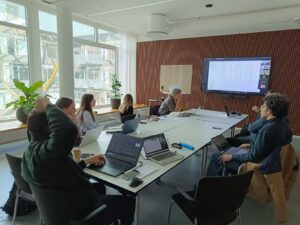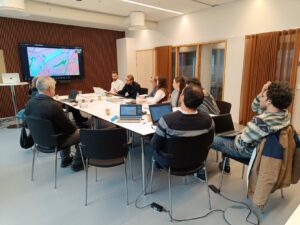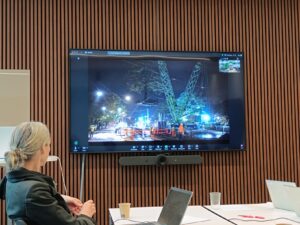
The Spatial Morphology Group (SMoG) at Chalmers University of Technology hosted the final TWIN2EXPAND Working Group Studio on Research Excellence in Gothenburg from 7 to 9 April 2025. Team members from all partner institutions were joined by staff from Chalmers and external participants from Eurocities, c/o city and Gothenburg Municipality. The overall focus of the studio was the social-ecological dimension of the project and its research components, integrating the green layers into evidence-based design and planning (EBDP).
Over three days, the team discussed the outcomes of the project’s research activities, how to handle data in an effective way from both a a research perspective and in education, upcoming deliverables and activities, including the release of policy briefs, the development of a matrix for EBDP and the upcoming summer school.
External participant presented:
- the EU Nature Restoration Regulation and how this applies to urban areas (by Heather Brooks from Eurocities). This led to a discussion of the role of EBDP in monitoring how green space is maintained through development in cities and how it can be increased beyond 2023.
- the experience of how C/O City turned from a project into a an association founded in collaboration with stakeholders from different sectors based on an ecosystems approach (by Helena Jeppsson). This initiative proved sustainable in the long term and informed discussions about how the TWIN2EXPAND project might continue beyond its funding period and turn into a ‘international hub’ for EBDP.
- the Gothenburg Municipality green strategy (by Johan Rehngren and Tyko Lang), including how they make use of GIS data and analyse green infrastructure to visualise ecosystem services and measure the added value of ecosystem. The session was a platform to discuss decision makers’ needs for information and political perspectives in expectations from data ana analyses to present the impact of different options for interventions.